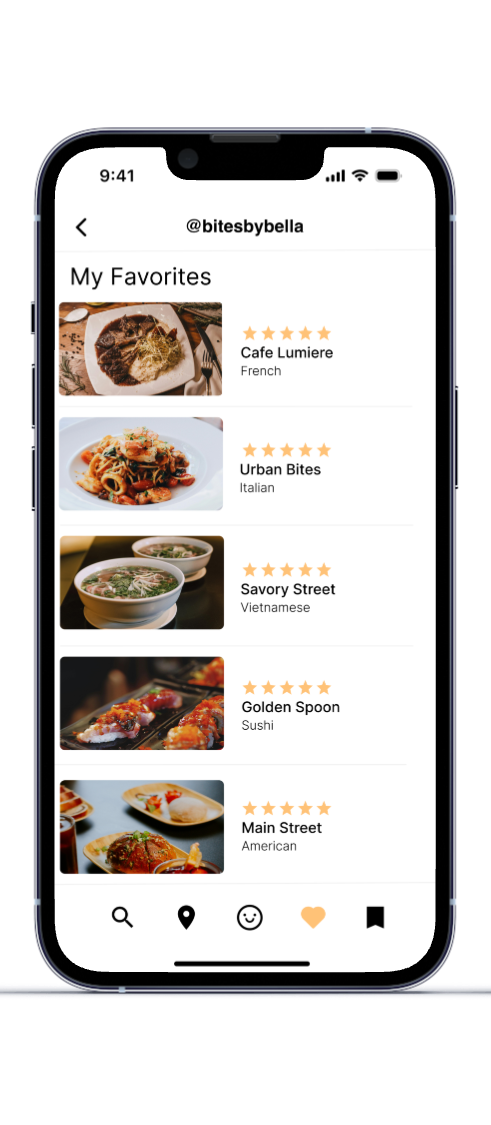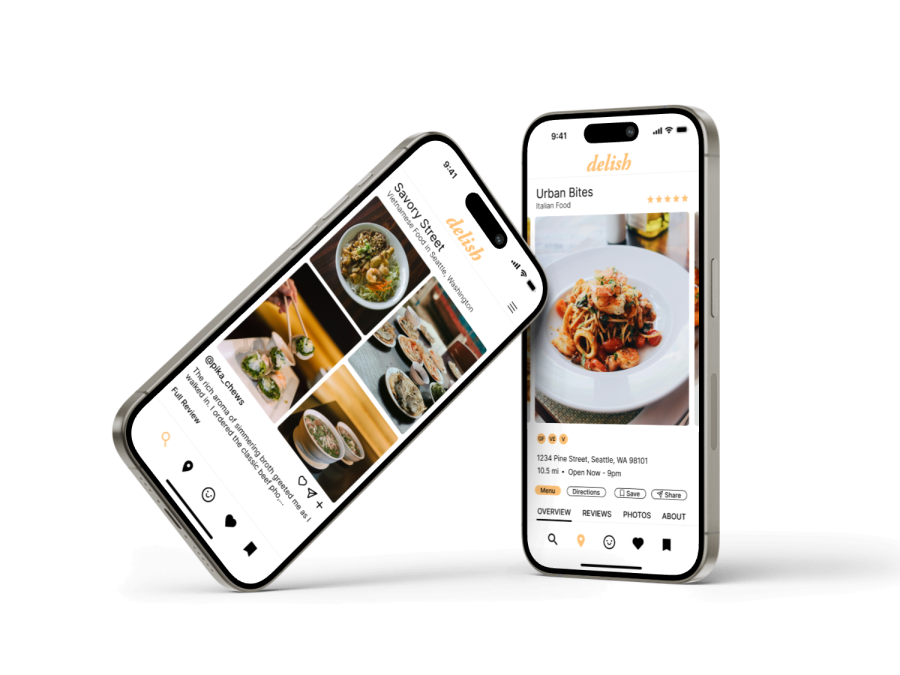
A marketing-first approach to building a social food discovery platform
End-to-end product strategy, design, and go-to-market execution
Role
Solo Project
Marketing + Design
Timeline
Mar - May 2024
10 weeks
Scope
Strategy to
Visual Design
Focus Areas
Market Analysis, GTM Strategy,
Product Design, A/B Testing
Tools
Figma, Adobe CC, Canva
Survey Analytics
I developed Delish as a marketing-first product strategy—conducting market research, defining competitive positioning, designing the product experience, and creating a scalable brand system for go-to-market execution.
I conducted primary research with 10 Gen Z users and competitive analysis of 5 platforms to identify market gaps and validate product need.
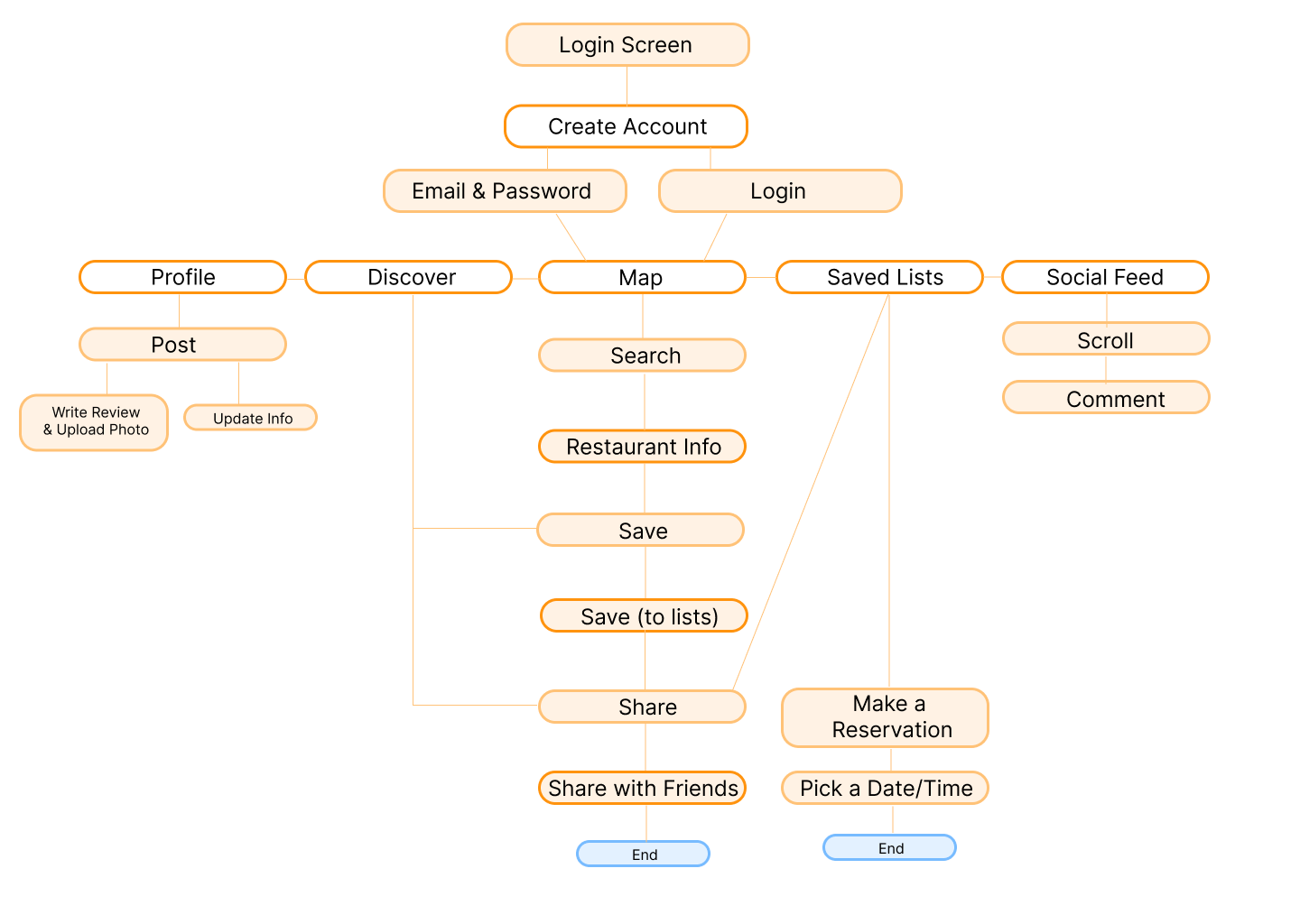
I designed a growth-focused architecture leveraging social graphs for viral acquisition, creating a frictionless conversion loop.
I built a complete Design System with documentation ensuring brand consistency and scalable campaign execution.
My research approach: I conducted primary research through user surveys and secondary research via competitive analysis to validate product-market fit before any design work began.
I surveyed 10 Gen Z/Millennial food enthusiasts (ages 18-28) to understand their pain points:
I analyzed 5 competitors (Yelp, Instagram, TikTok, Beli, The Infatuation) across key dimensions:
Based on my research insights, I designed the product around a Frictionless Conversion Loop that maximizes Organic Acquisition through social graph leverage.
I established these principles to guide both product design and go-to-market strategy:
Every saved restaurant prompts a share action, creating exponential user acquisition through friend networks
Immediate value delivery—search and discover before account creation to reduce drop-off
Advanced filters create unique value proposition vs. competitors, increasing daily active usage
Friend recommendations over algorithms build credibility and organic word-of-mouth growth
Hypothesis: Which UI design best facilitates the discovery-to-share flow and maximizes first-share conversion rate?
My Testing Approach:
I mapped the critical conversion path to test:
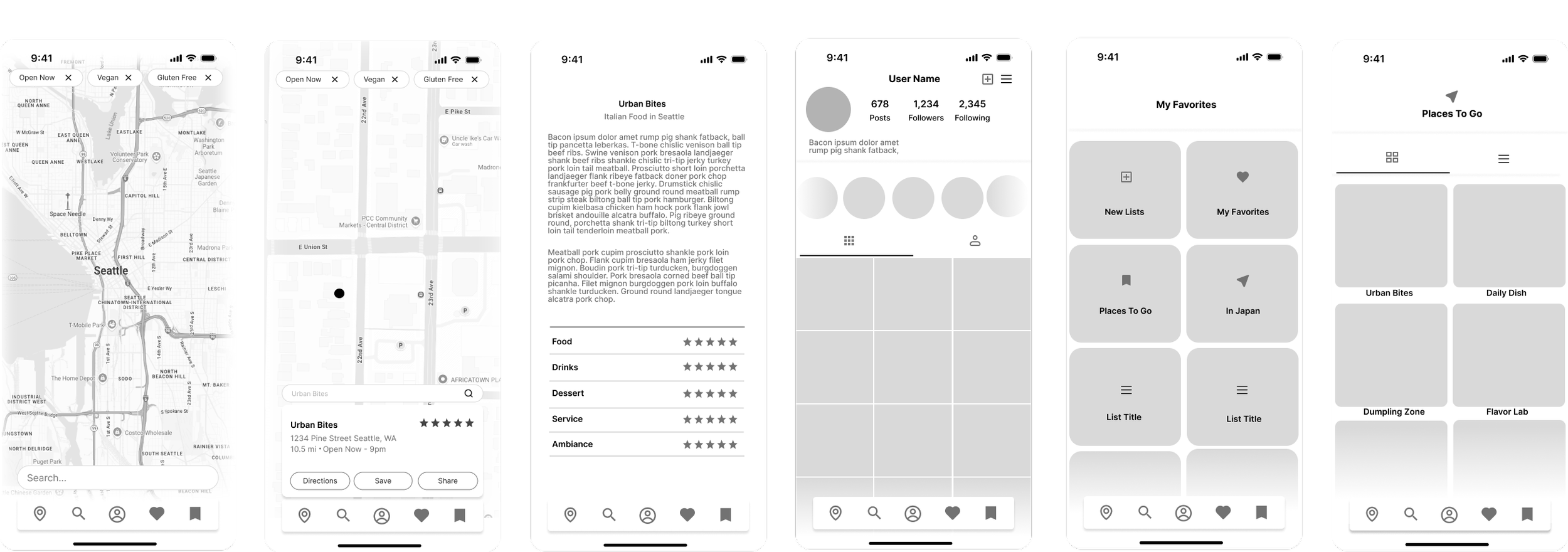
Design Rationale: Traditional bottom tab bar for familiarity
Key Features:
Results:
❌ 45% first-share rate
❌ Avg 12 seconds to share
❌ Users confused by multiple tabs
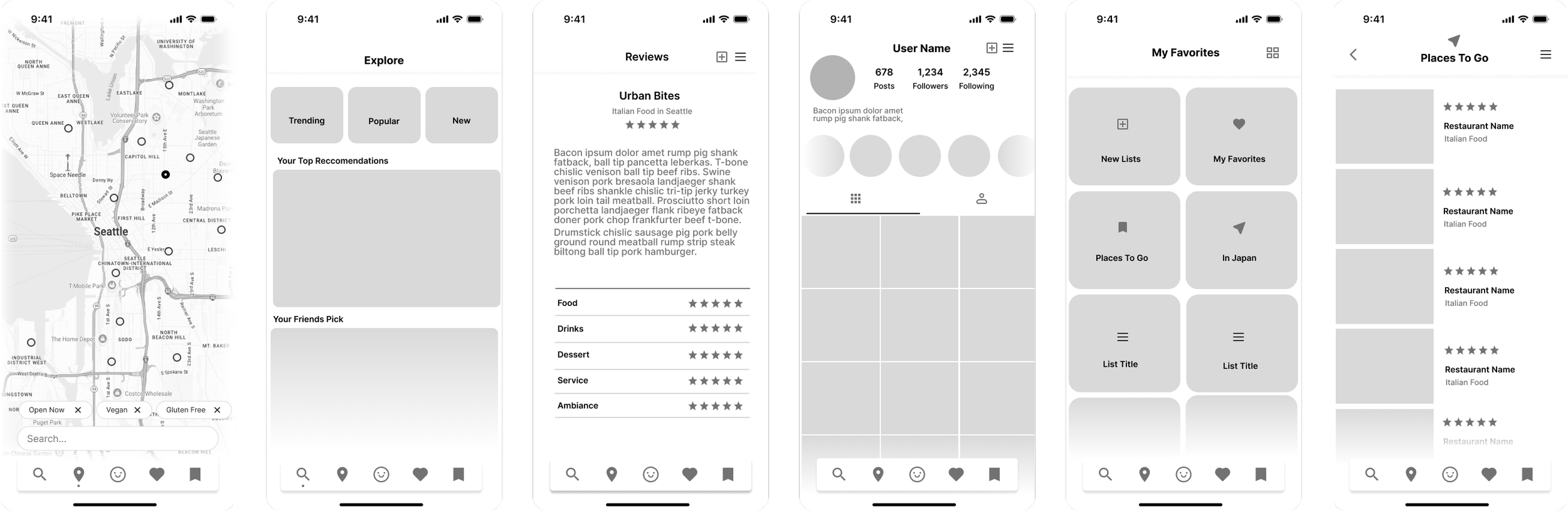
Design Rationale: Integrated save & share in discovery flow
Key Features:
Results:
✅ 78% first-share rate (+33%)
✅ Avg 6 seconds to share (-50%)
✅ "Feels natural and intuitive"
Option B's contextual action design reduced friction in the viral loop by 50%, directly supporting the marketing goal of maximizing organic acquisition through shares. This data-driven decision shaped the final product architecture.
After validating the product architecture through testing, I developed the visual identity and brand system—ensuring the design would support marketing objectives of premium positioning and viral shareability.
I drew inspiration from fine dining aesthetics to position Delish as a premium, curated experience—differentiating from the cluttered, ad-heavy interfaces of competitors.
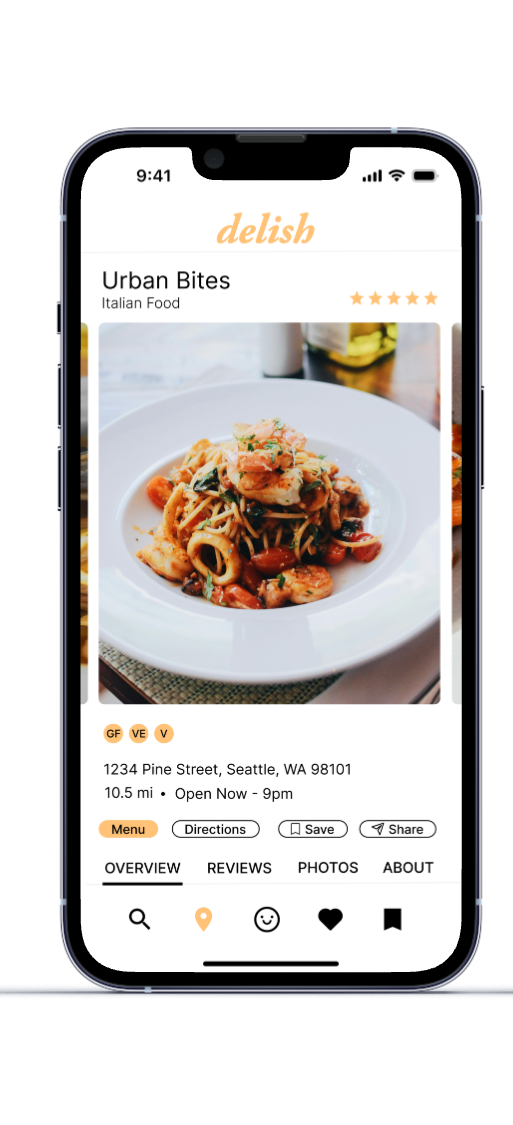
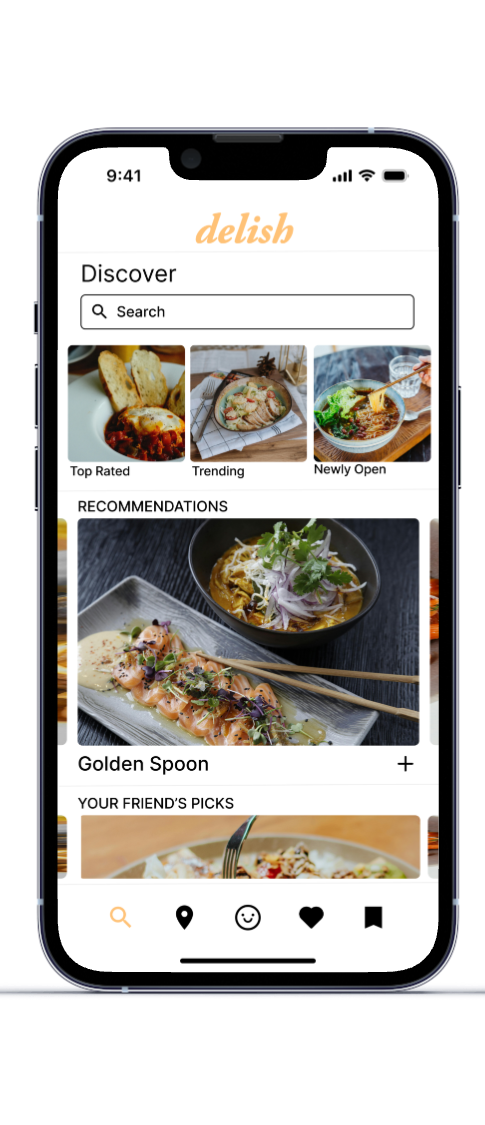
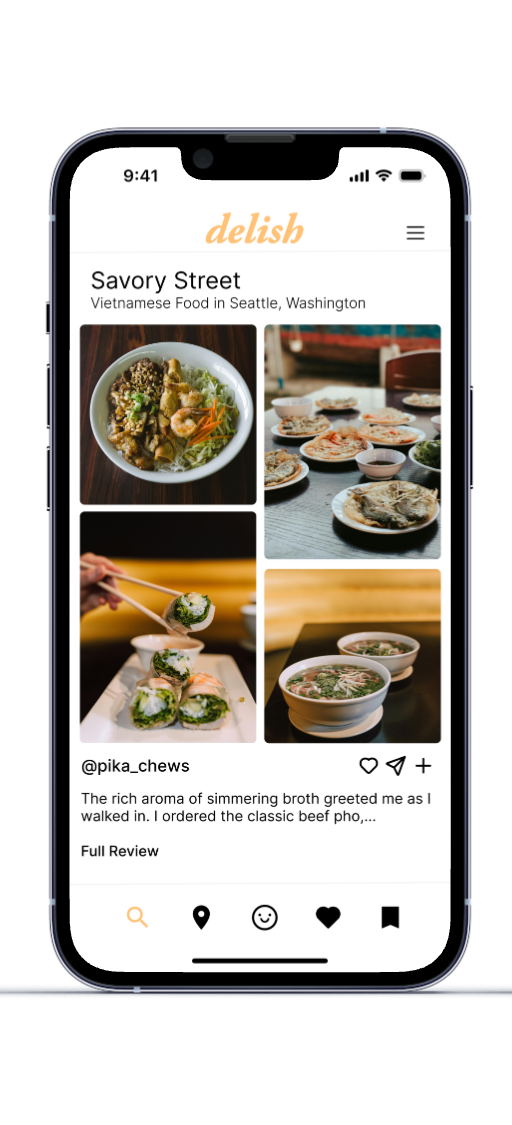
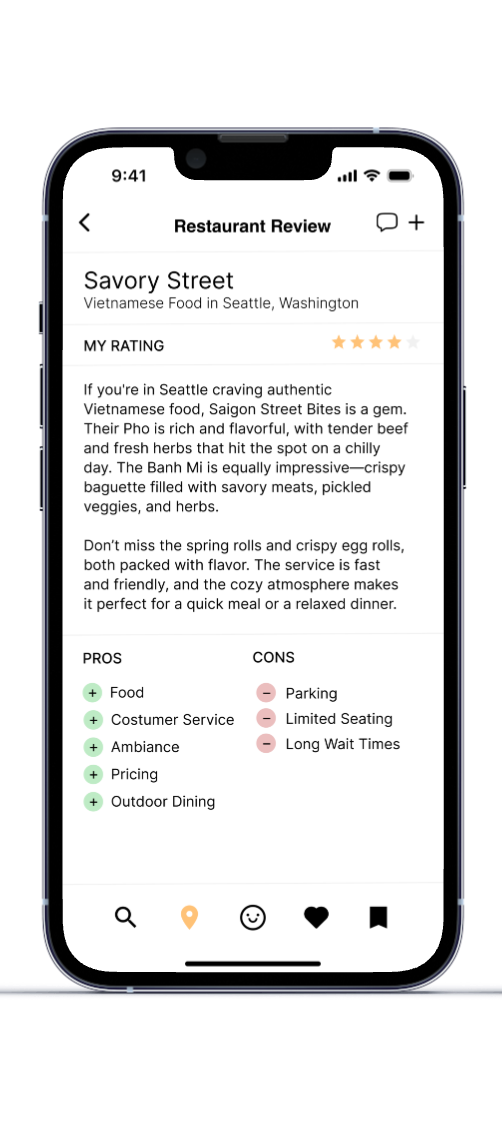
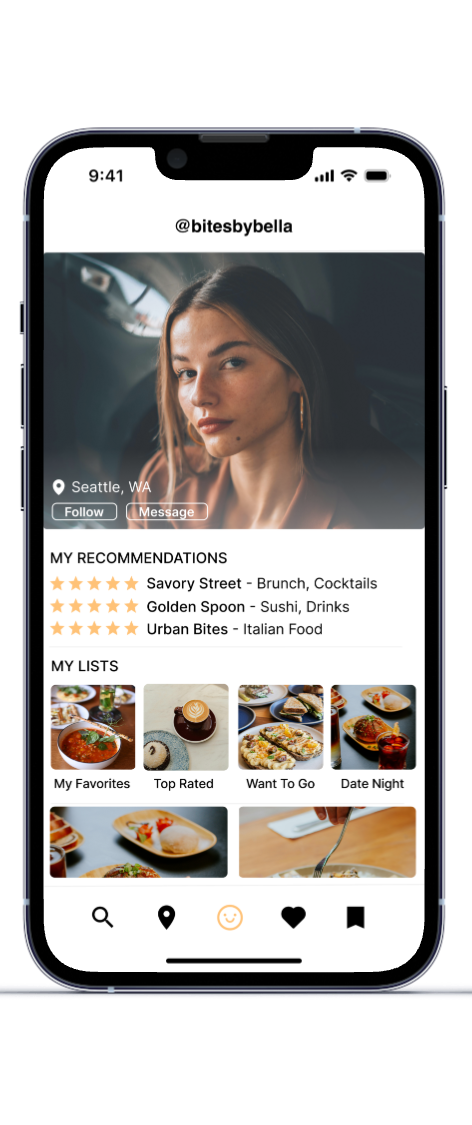
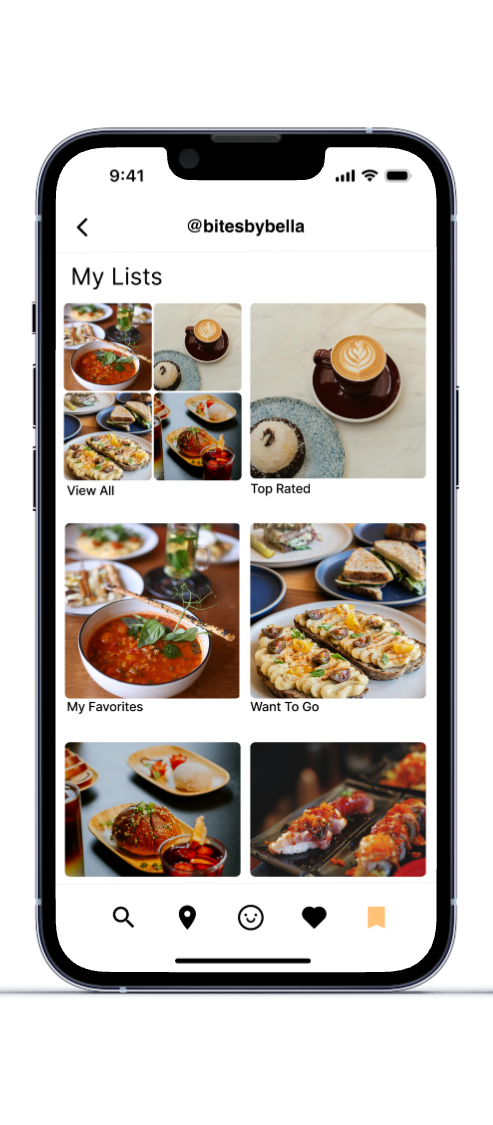
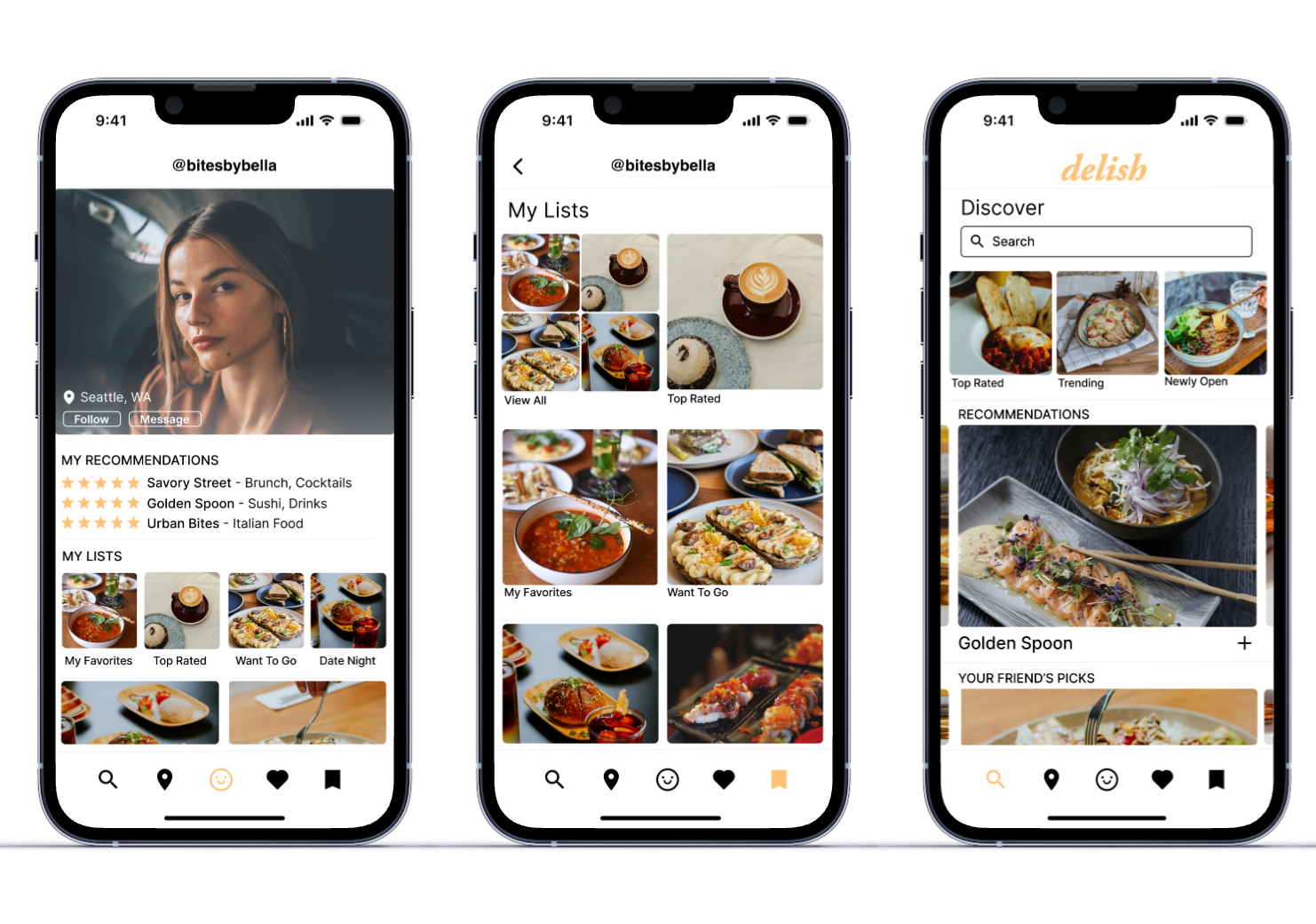
Complete UI design and user flows designed by me
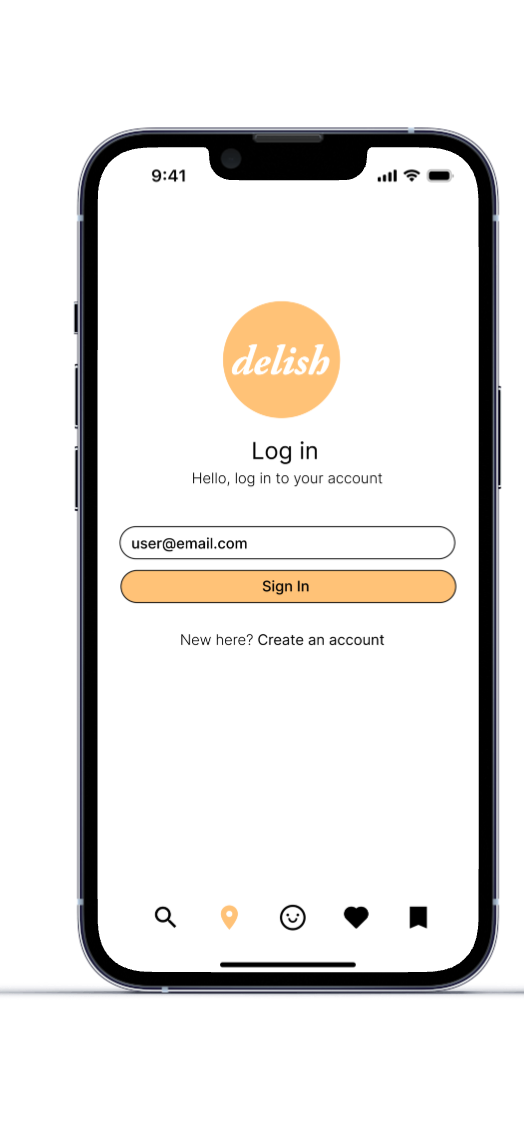
Streamlined authentication optimized for conversion—minimizing friction to get users discovering immediately
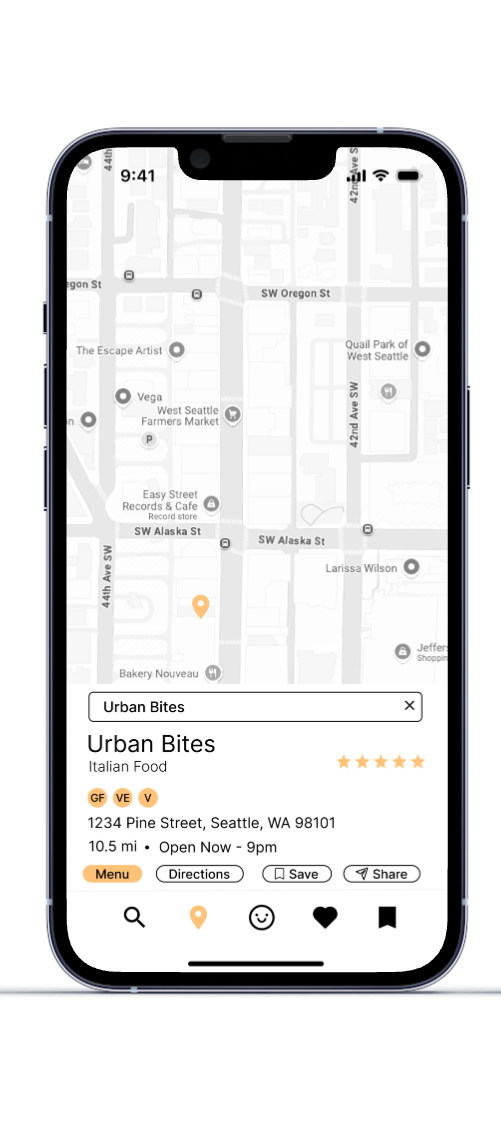
Location-based discovery with advanced filters—delivering on the personalization value proposition identified in research
Flexible list creation encourages content curation—positioning users as tastemakers in their social circles
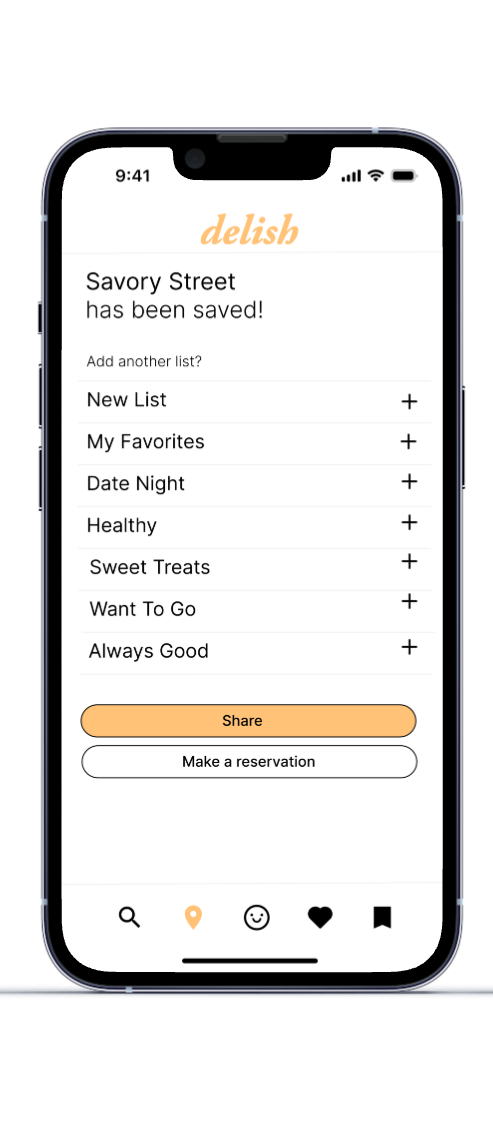
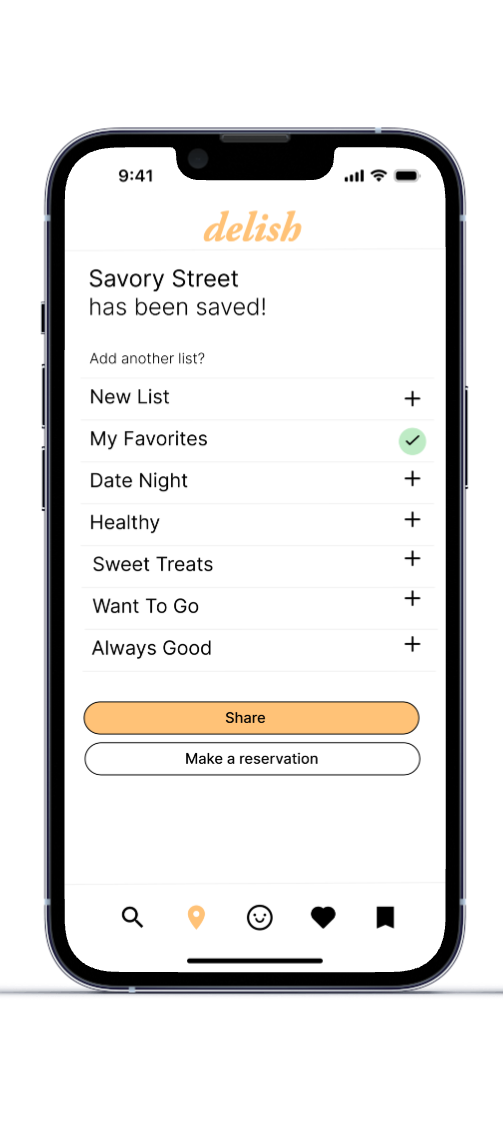
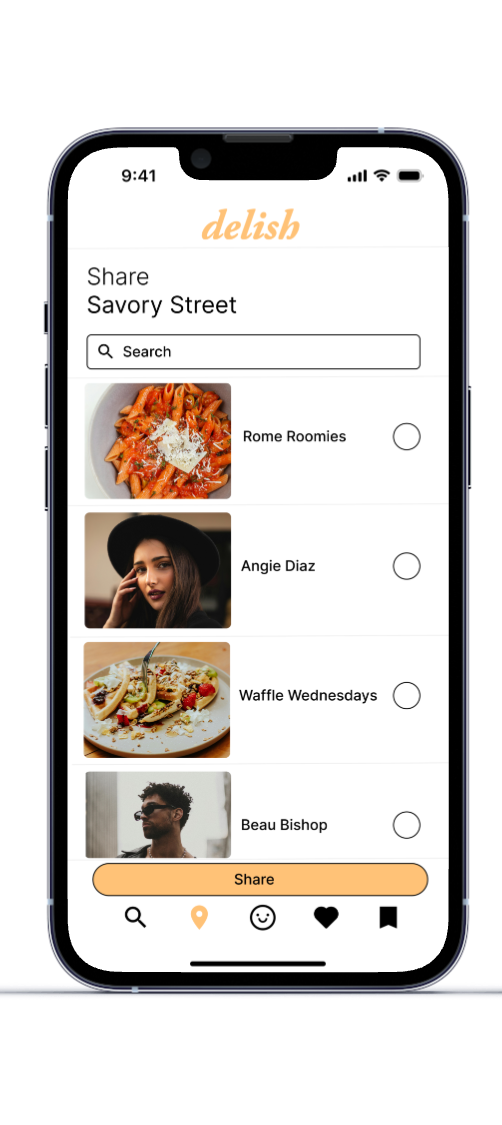
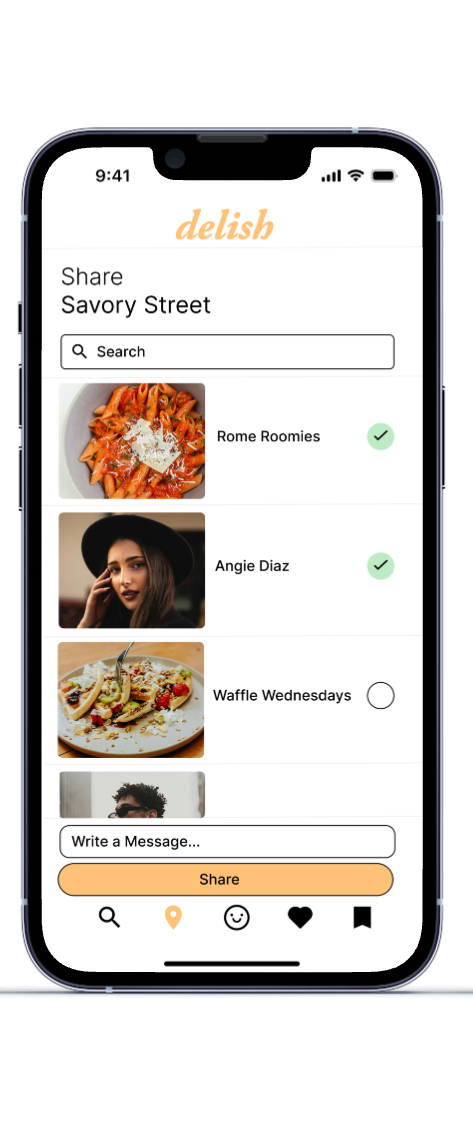
The viral loop engine—contextual share prompts activate network effects and drive organic user acquisition
Trust-based discovery through friend recommendations—building on research insight that users prefer peer reviews
Profile as marketing tool—shareable recommendations create personal brand value and incentivize continued engagement
Conducted primary and secondary research to validate market opportunity before design—ensuring product-market fit and defensible positioning against 5 established competitors.
A/B tested core user flows with 8 participants, achieving 33% improvement in conversion rate—directly supporting organic acquisition goals through measurable UX optimization.
Designed viral loops into product foundation—prioritizing features that leverage social graphs for zero-cost user acquisition vs. paid marketing dependence.
Built comprehensive Design System with marketing asset templates—ensuring brand consistency across campaigns and enabling rapid execution for go-to-market phases.
This project demonstrates my ability to combine marketing strategy, user research,
and product design to build growth-focused digital experiences.
Want to discuss this project or explore collaboration opportunities?